ByJohn A
Integrated X-Ray Sources for Reliable, Efficient Integration
X-ray systems depend on controlled energy delivery, stable output, and components that fit the physical and operational requirements of the final equipment. For OEM designers, source architecture affects installation, maintenance, shielding, cooling, and system layout. An integrated X-Ray generator brings several essential functions together for applications where space, consistency, and dependable operation matter.
X-ray source selection also affects how efficiently the complete system can be engineered and maintained. Factors such as voltage range, power rating, focal spot size, beam angle, cooling method, shielding, and physical dimensions all influence compatibility. Understanding these technical characteristics before integration helps equipment developers build systems around appropriate operating requirements while avoiding unnecessary design constraints.
What an Integrated X-Ray Source Brings Together
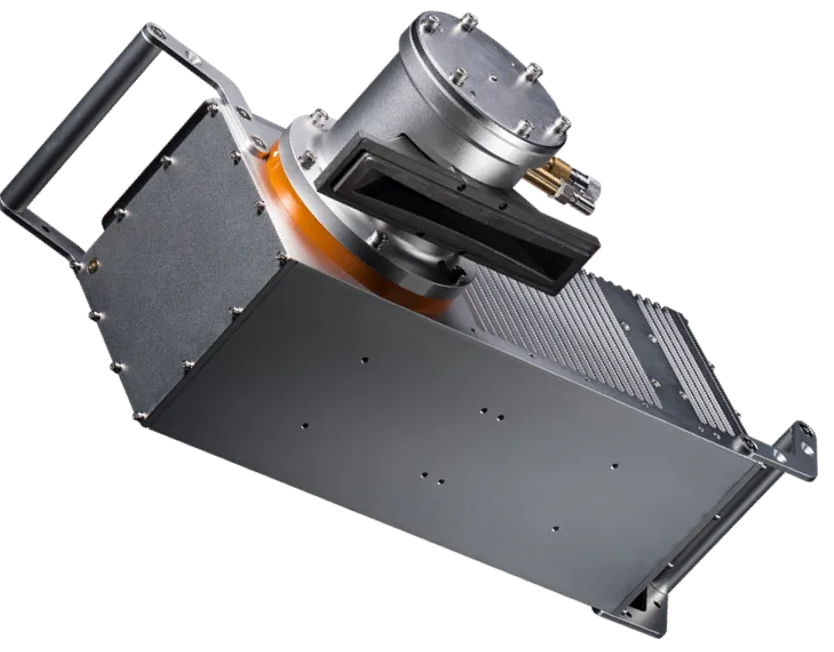
An integrated source combines the X-ray tube with major power and control elements inside one engineered assembly. The IXS series incorporates the high-voltage power supply, X-ray tube, and control electronics into a compact product. This can reduce the number of separate components that OEM engineers must accommodate during system development.
Consolidation also influences installation and servicing. A smaller component footprint can create more freedom around detectors, conveyors, robotic mechanisms, or other hardware. Depending on the model, localized radiation shielding and heat dissipation features can further simplify equipment design.
Key integration considerations include:
- Compact construction for OEM system layouts
- Combined power, tube, and control functions
- Radiation shielding on applicable models
- Cooling and heat dissipation requirements
Why Output Stability Matters
Stable high voltage and emission current are important because variations at the source can affect X-ray output consistency. Inspection, measurement, imaging, and analysis applications often require repeatable performance. A properly selected source therefore becomes an important part of overall system control.
Different applications also impose different electrical demands. The range includes units with different voltage and power levels, allowing designers to select configurations aligned with penetration, detector arrangement, and operating conditions. The specification should reflect the complete system design.
High Stability for Controlled Operation
High stability supports repeatable source behavior during demanding workflows. Models such as the IXS1010 and IXS1020 are designed to provide stable high voltage and emission current, supporting applications where consistent output is essential. This can support measurement and inspection.
Compact Construction for OEM Designs
Physical dimensions can become a major engineering constraint when equipment includes detectors, shielding, conveyors, robotic arms, or other assemblies. Compact source construction helps OEM teams use available space effectively. Several models support compact system designs and easier maintenance.
Radiation Shielding Within the Assembly
Localized radiation shielding can reduce the need for additional shielding around the source. Models including the IXS1015, IXS1020, IXS1680, and IXS2050 include shielding specifications intended to limit radiation around the chassis. Requirements depend on the equipment configuration and safety standards.
Beam Options for Different Detection Setups
Beam geometry influences how an X-ray system interacts with its detector. Depending on the model, fan or cone beam configurations are available, including options intended for flat-panel or line-sensor detection. The beam arrangement should match the imaging architecture.
Cooling and Thermal Considerations
X-ray sources generate heat during operation, making thermal management important in equipment design. The product range includes designs with heat dissipation components and cooling considerations suited to different power levels. Thermal integration supports reliable operation.
Matching Power to the Application
Power and voltage requirements vary significantly between applications. A compact source for thickness gauging can have different requirements from a higher-power unit used for industrial inspection or security scanning. Reviewing voltage, power, focal spot, beam angle, input range, dimensions, and weight supports selection.
Applications Across Industrial and Inspection Systems
X-ray technology serves a broad range of inspection requirements. Security systems use X-ray sources for baggage, parcel, cargo, vehicle, and people screening, while mobile backscatter systems require compact solutions suited to field operation. The source must support the imaging method and inspection platform.
Industrial applications create another set of requirements. Non-destructive testing, thickness gauging, sorting and recycling, and wood log or board inspection depend on controlled X-ray generation. Electronics systems can support component counting, while food processing systems can inspect products for foreign contaminants and quality abnormalities.
Medical, Analytical, and Specialized Uses
Medical systems require controlled X-ray generation for dental CBCT, bone densitometry, veterinary radiology, irradiation, and radiotherapy. These applications differ in operating conditions and system architecture, so the source must be matched to the intended equipment. Compact construction can also help where space and weight are constrained.
Analytical instruments use X-ray generation for material analysis and X-ray spectrometry, where stable, repeatable output contributes to reliable measurements. Specialized systems may place additional demands on beam geometry, power, control, or integration. A poorly matched source can create engineering complications.
Important application factors can include:
- Imaging or measurement objective
- Required voltage and power
- Detector and beam configuration
- Operating cycle and thermal conditions
- Mechanical and electrical integration
Selecting the Right Source for an OEM System
Source selection should begin with actual operating requirements. Voltage and power provide only part of the picture. Mechanical dimensions, input power, focal spot, beam angle, cooling, shielding, control requirements, duty cycle, and detector configuration can all affect suitability.
A practical evaluation should consider:
- Required maximum voltage and power
- Available space and allowable component weight
- Beam geometry and detector arrangement
- Input electrical conditions and controls
- Thermal management and operating cycle
- Radiation shielding within the enclosure
- Installation, maintenance, and service requirements
This approach helps prevent a mismatch and gives OEM engineers a clearer basis for comparing source architectures.
See also: What Helps Business Newsletters Get Better Response and Lasting Engagement
Final Thoughts
What makes source integration valuable when an X-ray system must remain compact, stable, and adaptable? The answer lies in coordinating several engineering functions within a single product. For OEMs developing inspection, analytical, industrial, security, or medical equipment, selection should consider electrical performance, integration, thermal management, shielding, and beam configuration together.
VJ X-Ray supports OEM development with integrated X-ray sources and high-voltage generators designed for diverse applications, backed by more than three decades of experience in X-ray technology and high-voltage design. Its portfolio includes the IXS series alongside HVL/HVG high-voltage generator solutions, with options spanning different voltage and power requirements. For organizations evaluating an X-Ray machine generator, this combination of experience and customizable solutions can support dependable X-ray system development.