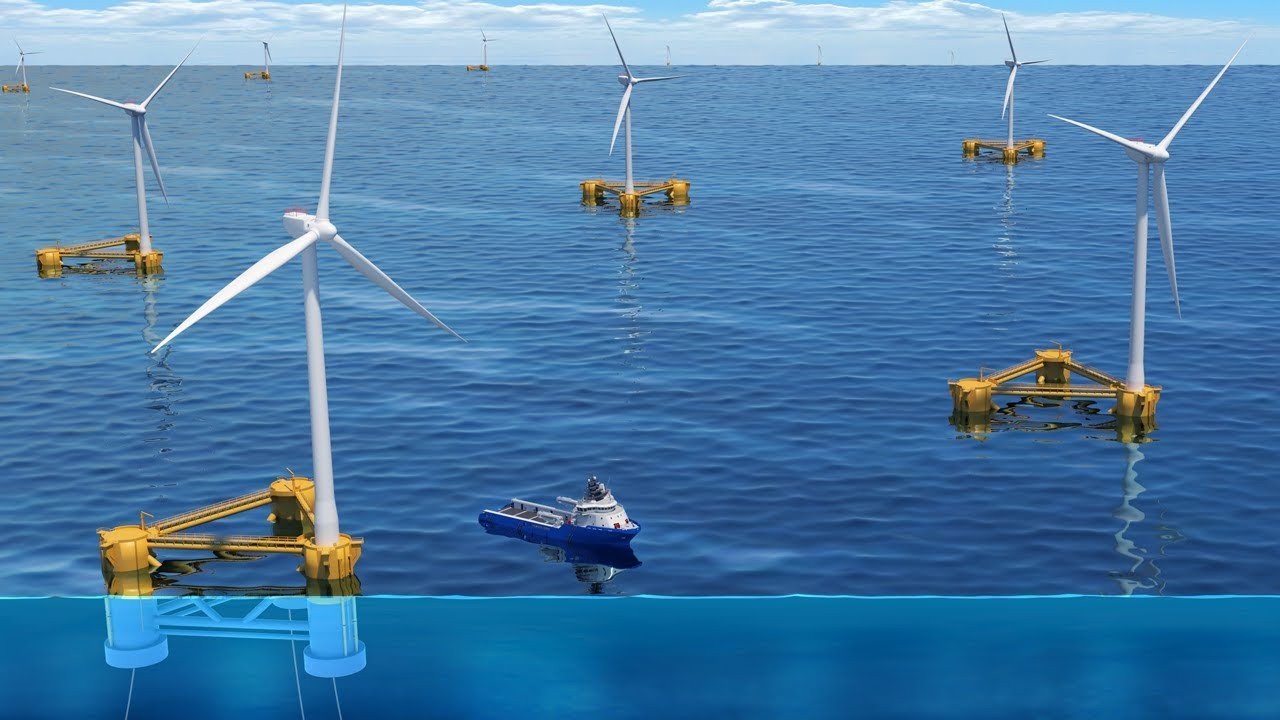

From a distance, a service operation vessel looks like a compact cruise ship that took a wrong turn into an industrial zone. Up close, every part of it exists for a specific job: moving technicians safely onto turbines, keeping them productive for weeks offshore and doing so with ever less fuel. Looking at its design features one by one shows how much engineering hides inside a vessel type that barely existed twenty years ago.
Unlike a crew transfer boat that dashes out and back each day, this ship is a self-contained base. It must generate its own power, store weeks of provisions and spare parts, launch workboats, run workshops and still ride comfortably enough that fifty or more people can sleep well a few metres from the machinery making it all happen.
The Gangway Is the Whole Point
The defining structure is the walk-to-work gangway, usually mounted on a tower amidships. The tower adjusts its height so the gangway meets the turbine’s landing platform, while motion-compensation systems in the base and tip counteract the ship’s heave, roll and pitch. Sensors feed movements to hydraulic and electric drives many times per second, keeping the tip of the bridge almost eerily steady while the deck beneath it moves.
That steadiness buys working days. Transfers that would be unsafe by boat ladder become routine in wave heights that once shut a wind farm down. The gangway also carries more than people: a lift in the tower moves parts and tools, so a team arrives at the turbine with what it needs rather than hauling equipment up by rope. Around the gangway, designers plan muster areas, changing rooms and safety briefing spaces, because fifty technicians crossing in sequence is a logistics exercise, not an afterthought. It is this integrated system that turns a ship into a true sov vessel rather than a ferry with cabins.
Accommodation Designed Around Rest
The hotel block is engineered as carefully as the bridge. Cabins sit high and away from engine noise, with insulation, blackout blinds and individual climate control. Communal design matters too: a restaurant that can seat a full shift change at once, recreation rooms, a cinema corner, a gym and outdoor deck space for fresh air on calm evenings. Laundry, medical facilities and offices for the operator’s planners complete the small-town feel.
Workspaces follow the same logic of flow. Warehouses connect by lift to the gangway tower, workshops sit close to the parts stores, and a mission control room tracks which teams are on which turbines in real time. Daughter craft, small fast workboats, hang in davits ready to launch, extending the vessel’s reach to turbines beyond gangway range.
Read Also: Choosing the Right Logitech Mouse for Your Needs
Hybrid Power for a Ship That Rarely Hurries
Propulsion on these vessels has a peculiar profile: long, slow transits between turbines, hours holding position, and short bursts of power for transfers. That pattern suits hybrid design. Diesel generators charge battery banks, and batteries then smooth the load, letting engines run at efficient speeds or shut down entirely during quiet positioning. Shore power connections in port cut emissions further while the vessel loads.
The gains are practical as well as environmental. Batteries provide instant reserve power if a generator trips during a transfer, a safety benefit beside a turbine. Fuel savings over a season are significant, and some newer designs prepare for future fuels with space and piping reserved for conversion. Designers also harvest efficiency in small ways: LED lighting, heat recovery from engines to warm accommodation and water, and hull coatings that reduce drag between dry-dockings.
A Design Still Evolving
Each new generation stretches the template: more cabins for larger maintenance campaigns, bigger battery capacity, gangways rated for higher waves, and layouts prepared for remotely operated inspection vehicles. The direction is consistent, though. The vessel is becoming quieter, cleaner and more capable, because the wind farms it serves are moving farther out and expecting more from the ships that keep them running.